
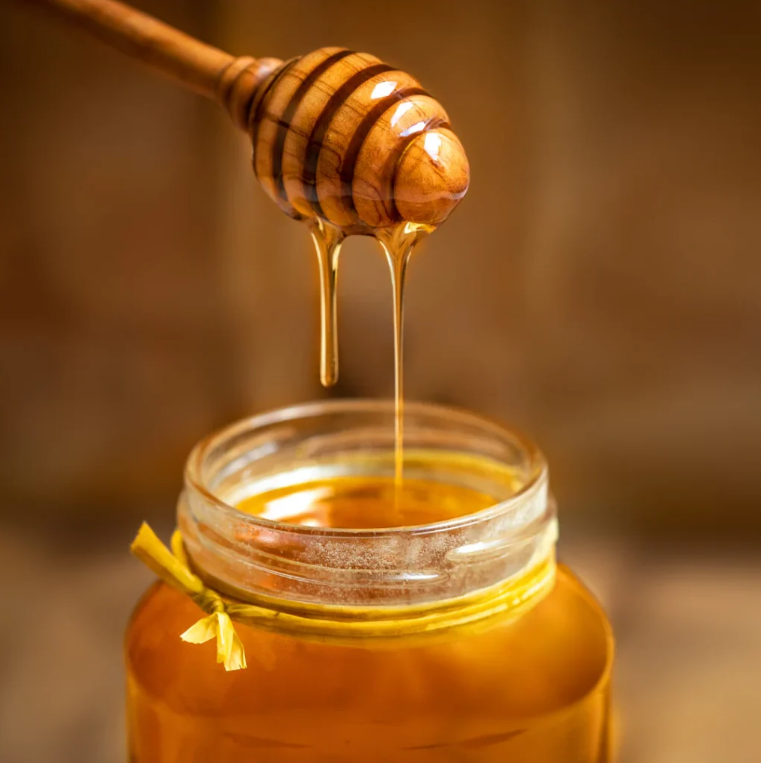
Here’s a fact that surprises many: real honey crystallizes, and that’s a good thing.
Many people wrongly assume that crystallized honey has gone bad. But in truth, crystallization is a natural process that happens when the glucose in honey separates from the water and forms crystals.
So what should you look for?
-
- Real honey will start to crystallize over time, especially when stored at cooler temperatures (below 57°F or 14°C). This crystallization can appear grainy, or you might notice a sugary texture forming near the bottom of the jar.
- Fake honey usually does not crystallize, or it stays in a syrupy, watery form indefinitely. That’s because it lacks the natural sugars and enzymes that promote crystal formation.
If your honey has natural-looking crystals, don’t throw it out — that’s actually a sign of quality!
Tip: If you prefer your honey smooth, just place the jar in warm water (not boiling) and stir gently until it liquefies again.
Bonus Test: The Thumb Test
If you have no water and no time, try the thumb test:
- Drop a small amount of honey on your thumb.
- Check if it spreads or runs.
-
- Real honey stays intact. It’s thick, slow-moving, and tends to stick right where you put it.
- Fake honey will spread quickly or drip, because it’s more watery.
While not as foolproof as the other methods, this can give you a quick hint when you’re on the go.
So, What Should You Do When Buying Honey?
Continued on next page:
To see the full cooking instructions, go to the next page or click the Open button (>) and don't forget to SHARE it with your friends on Facebook.