

“Who are you?”
His voice shakes.
“Where’s my mother?”
Your mother’s been dead forty years, I want to say.
I’m your wife.
I’m Maggie.
Remember?
I’m the girl you held the door for at Brennan Manufacturing.
The one you married in the Presbyterian church.
The one who gave you a son.
But I don’t say any of that because it’ll only confuse him more.
“I’m here to help you get dressed,” I say instead.
Keep my voice soft.
Unthreatening.
He lets me help him with his shirt.
His hands shake too much to manage the buttons anymore.
When did that start?
Last month?
Last week?
Time blurs when you’re watching someone disappear piece by piece.
The phone rings while I’m making breakfast.
Harold sits at the table staring at nothing.
Sometimes I wonder what he sees.
If he’s back in 1975 walking a screaming baby around the house.
Or maybe 1982 opening a college fund with money that could have changed our lives.
Maybe he’s somewhere happy.
I hope he’s somewhere happy.
“Hello?”
“Mom, it’s Derek.”
My hands tighten on the phone.
He hasn’t called in six weeks.
Not since I told him his father asked for him three times last Tuesday.
Asked where his son was.
Why his boy didn’t visit.
“How’s Dad doing?”
The same question he always asks.
Never, “How are you managing?”
Never, “Do you need help?”
Never, “Can I come stay for a few days so you can sleep?”
“He’s declining.”
I watch Harold try to pick up his coffee cup.
Miss.
Try again.
“The doctor says we’re entering the final stage.”
Silence on the other end.
I hear ice clinking in a glass.
Laughter in the background.
He’s at brunch.
Or a party.
Or one of those networking things that matter more than his dying father.
“That’s really tough, Mom. I’m sorry.”
Sorry.
The word people use when they don’t mean it.
When they want you to stop talking about uncomfortable things.
“I think you should come visit.”
I hate how my voice sounds.
Small.
Begging.
“Soon. While he still has moments of clarity.”
“Yeah, absolutely. Let me check my calendar and get back to you.”
He doesn’t check his calendar.
He doesn’t get back to me.
Three weeks pass.
Harold stops eating solid food.
The hospice nurse, a kind woman named Patricia who smells like lavender, shows me how to help him with nutrition shakes.
How to turn him so he doesn’t get bedsores.
How to keep him comfortable.
“You’re doing an amazing job,” Patricia says one afternoon.
She’s checking Harold’s vitals while I change his sheets.
“Most people can’t handle this alone.”
“I’m not alone.”
The words come out automatic.
“My son helps.”
Patricia’s face does something I can’t quite read.
Sympathy, maybe.
Or pity.
“That’s good. Family support makes all the difference.”
I don’t tell her Derek hasn’t been here in eight months.
Don’t tell her about the phone calls that last three minutes.
Don’t tell her my son is two hours away, living his best life while his father fades into nothing.
October comes.
The leaves outside our bedroom window turn gold and red.
Harold used to love fall.
Would rake leaves into piles for Derek to jump in.
Our boy would shriek with laughter, and Harold would pretend to be annoyed, but his eyes always smiled.
I call Derek on a Tuesday.
He answers on the fifth ring.
“Mom, everything okay?”
“The doctors say it’s time. Weeks maybe, not months.”
More silence.
Then, “Okay. Okay, I hear you. I’ll try to come up soon.”
“Soon needs to be now, Derek.”
“I know, I know. Work is just crazy right now. We’re launching this new campaign, and I’m the lead on it. But I’ll figure something out.”
He doesn’t figure anything out.
Harold passes on a Tuesday morning in January.
Early.
So early the sun hasn’t fully risen yet.
He’s lying in our bed, the same bed we’ve shared for fifty-one years, and his breathing changes.
Gets shallow.
Stops.
Patricia checks for a pulse, then shakes her head gently.
“He’s gone, Margaret. I’m so sorry.”
I’m holding Harold’s hand.
It’s still warm.
Still feels like him.
But he’s not there anymore.
The man who hummed lullabies and built fortunes and loved me steadily for half a century is gone.
And I’m alone.
I call Derek from the hospice phone.
My cell is downstairs somewhere.
Doesn’t matter.
I need to tell our son his father is dead.
He answers on the fourth ring.
“Hey, Mom. What’s up?”
“Derek.”
My voice cracks.
“Your father is gone.”
Nothing.
Just breathing on the other end.
“Derek?”
“Oh. Oh God, when?”
“Twenty minutes ago.”
“Was he… did he suffer?”
“No. He went peacefully.”
“Okay. Okay, that’s good. That’s… okay.”
He sounds strange.
Distant.
Like he’s reading from a script.
“When’s the funeral?”
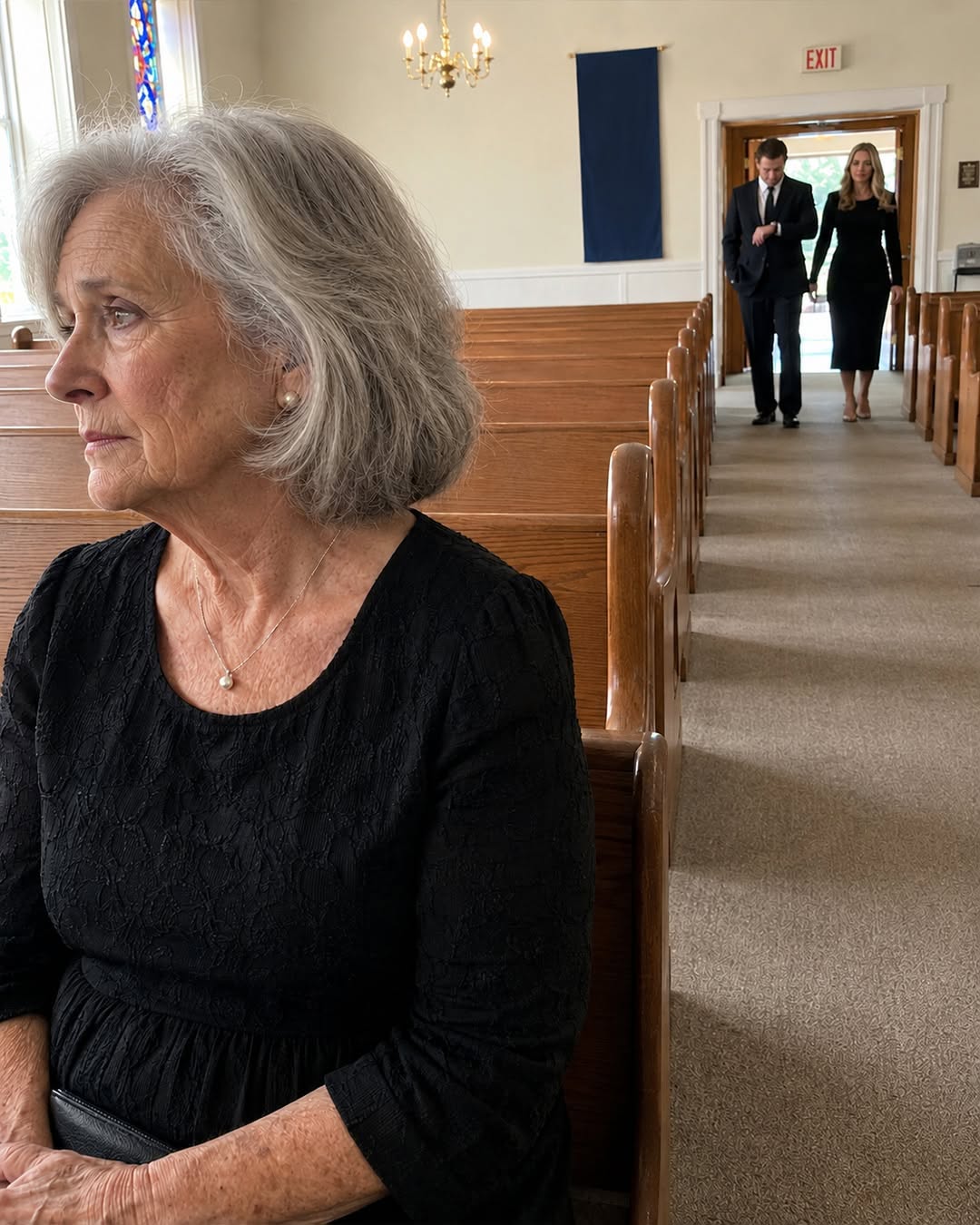
“Saturday. Two o’clock at First Presbyterian.”
The silence stretches so long I think the call dropped.
“This Saturday?”
“Yes.”
“Mom, that’s really short notice.”
The words hit me like cold water.
Short notice.
His father just died, and he’s worried about his schedule.
“Your father just died, Derek. Saturday is four days away.”
“I know, I know. It’s just Vanessa and I have this thing, the Hendersons’ winter gala. It’s important for my career. All the executives will be there.”
I can’t speak.
Literally cannot form words.
“Look, maybe we can come Friday evening and leave Saturday night. We’d miss most of the gala, but I could probably still make the after-party Sunday. Let me talk to Vanessa.”
“Your father is dead.”
My voice sounds like it belongs to someone else.
Someone harder.
Colder.
“I know, Mom. And I’m sad, really. But Dad wouldn’t want us to put our lives on hold, right? He’d want us to be practical about this.”
Practical.
That word sits in my chest like a stone, gets heavier with each breath.
CONTINUE READING...>>
To see the full cooking instructions, go to the next page or click the Open button (>) and don't forget to SHARE it with your friends on Facebook.