
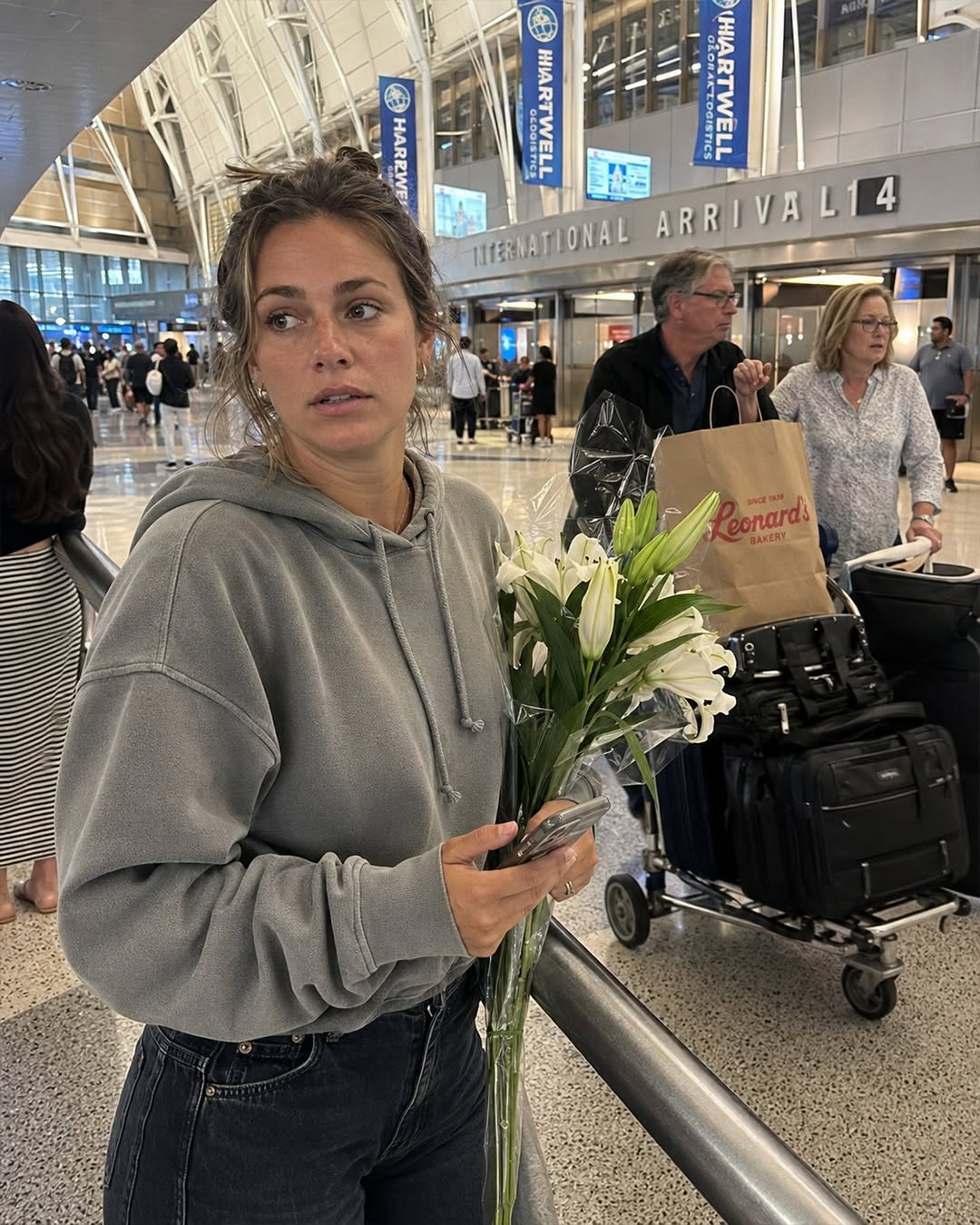
Some questions do not deserve the dignity of an answer.
By morning, Nathan had found a new tone. He moved from outrage to wounded reason, which I recognized immediately as his favorite costume. When anger failed, he became careful. He wrote long messages about stress, pressure, loneliness, reputation, and how “complicated” things had become between us. He admitted the situation “looked bad.” He insisted nothing meaningful had happened. He reminded me that divorce was ugly, that people talked, that families could make things worse.
He did not apologize for using my name.
That omission told me where his grief was centered.
At ten, Vanessa called from an unknown number. I stared at it for two rings before answering.
“I think we should speak woman to woman,” she said.
I looked at the printed photo of her leaning into my husband under the arrivals sign. The phrase woman to woman has a way of appearing only after one woman has helped harm another and wants a softer landing.
“No,” I said.
I ended the call.
She texted immediately.
Nathan told me you were separated.
I did not reply.
Another message arrived.
He said the airport access was his company benefit.
Then a third.
You don’t understand what he promised me.
That one almost made me answer. What had he promised her? A future? A public place beside him once his convenient wife became a private inconvenience? A life of lounges and side entrances and hotel mirrors? Vanessa had walked through that corridor believing it proved she had been chosen by a powerful man.
How small that prize must have looked when the door stopped recognizing his name.
I took screenshots and saved them in the Terminal 4 folder.
At noon, Nathan appeared at the townhouse anyway.
The doorbell camera showed him standing on the front step in yesterday’s coat, hair combed, face arranged for apology. He carried flowers, not lilies, not my favorite white tulips, but a dramatic mixed bouquet wrapped in black paper. The kind sold in hotel lobbies to men who wanted regret to look expensive.
He pressed the bell twice.
My father appeared behind me in the hallway. My mother came from the kitchen, drying her hands on a towel. No one spoke.
Nathan leaned toward the camera.
“Clara,” he said. “Open the door, please.”
Please had rarely appeared in his mouth unless he needed something.
I pressed the intercom button. “Leave the flowers on the step and go.”
He glanced toward the street, embarrassed by the possibility of neighbors.
“I am not doing this outside.”
“Then do it nowhere.”
His face tightened. “This is childish.”
My father shifted, but I lifted one hand. He stopped. I loved him fiercely for that.
Nathan lowered his voice. “I know your parents are there. I know they’re upset. But this is our marriage.”
“Our marriage was in the airport yesterday,” I said. “You brought Vanessa to it.”
He flinched.
Good.
Not enough. But good.
“I made a mistake,” he said.
“You made plans.”
He had no answer ready for that. The bouquet sagged slightly in his hand.
A neighbor walked past on the sidewalk, slowed just enough to recognize him, then kept moving with careful discretion. Nathan’s shoulders stiffened. His concern for appearance entered his posture before any concern for me ever did.
“If you shut me out, people will ask questions,” he said.
“They should.”
For the first time, I saw fear in his eyes. Not fear of losing me. Fear of losing the version of himself that other people believed in. It made the last soft thread inside me pull loose.
He placed the flowers on the step with excessive care and leaned toward the camera again.
“You’ll regret making this public.”
My mother inhaled sharply.
I pressed the button.
“You made it public when you lied under the arrivals sign.”
Then I cut the intercom.
Nathan remained on the step for almost a minute, staring at the closed door as if he could force wood to feel guilty. Finally, he turned and walked away, leaving the bouquet behind like evidence of a performance that had failed to become forgiveness.
I did not bring the flowers inside.
An hour later, it rained. The black paper sagged. The petals bent under the water. By evening, the bouquet looked exactly like what it was: an expensive gesture with no roots.
Nathan’s next move was predictable. By late afternoon, mutual friends began texting. They had heard there had been a misunderstanding. They had heard Nathan was devastated. They had heard my parents were influencing me while I was emotional.
The messages were gentle, but the shape beneath them was familiar. A man had broken trust in public, then hurried to gather witnesses before the woman he hurt could speak plainly.
I answered with one image and three lines.
The image was Nathan and Vanessa at Terminal 4. The lines read: Nathan was not overseas. He used my airport access for Vanessa Lane. My parents and I saw them.
No emotional paragraph. No invitation to debate.
The replies changed quickly.
I’m so sorry.
I had no idea.
He told us you two were having problems.
One person did not reply at all, which told me enough.
Five minutes later, Nathan texted.
Why are you humiliating me?
I looked at the words with a strange calm. Men like Nathan often treat exposure as the injury and betrayal as the private weather that caused it. He could lie to me, use my name, bring another woman through my doors, and let my parents witness the aftermath. But the moment I allowed others to see the facts, he became the victim of humiliation.
I typed one reply.
I am not humiliating you. I am removing the cover.
Then I blocked him for the night.
The next day, I went to Hartwell International without flowers, without shock, and without the illusion that Terminal 4 belonged to the worst thing that had happened there. Airports are too large for one betrayal. They hold reunions, delays, tired children, lost bags, business calls, goodbye kisses, and parents arriving with ridiculous souvenirs. Pain feels enormous inside a body. The world reminds you it is not the only thing happening.
Adrien Shaw met me near a side office overlooking the runways. He was discreet, efficient, and kind enough not to offer sympathy before offering facts. He handed me a slim folder.
“Recent household-linked use,” he said.
I opened it by the window.
There were seven entries.
Seven.
CONTINUE READING...>>
To see the full cooking instructions, go to the next page or click the Open button (>) and don't forget to SHARE it with your friends on Facebook.