
The absence of hatred was enough for the day.
That evening, I returned home to the townhouse. The rooms were quieter now, but they had changed. My father’s books had left faint gaps on the guest room shelf. My mother’s teacup still sat in the cabinet she had reorganized. The wedding photo frame had been replaced by a picture of me with my parents at the reception wing opening, all three of us smiling, the ridiculous ceramic rooster visible in my father’s tote bag.
I made tea and sat by the window. The city moved below. No message from Nathan arrived. No explanation waited to be managed. No lie required my softness as cover.
The quiet was no longer the quiet before bad news.
It was the quiet after locks had been changed and a woman had remembered the sound of her own thoughts.
Before bed, I opened the Terminal 4 folder one last time. The photo of Nathan and Vanessa still had power, but less than before. At first, it had been a blade. Then evidence. Then a map.
Now it was becoming history.
I moved the necessary records into a sealed archive and deleted the duplicates from my desktop. I kept one printed copy in a file marked Boundaries, not because I wanted to revisit the pain, but because memory is easier to respect when it has a proper place.
Then I removed my wedding ring from the small dish on my dresser. I had stopped wearing it weeks ago, but it had remained there like an unanswered question. I placed it in an envelope and sealed it.
Not with anger.
With completion.
A year after Terminal 4, I returned to the airport to pick up my parents again.
This time, I carried no lilies. My father had forbidden flowers after claiming the old bouquet had “suffered enough under dramatic circumstances.” Instead, I brought coffee for my mother and a paper bag of cinnamon pastries for my father, who insisted airport food tasted like delay.
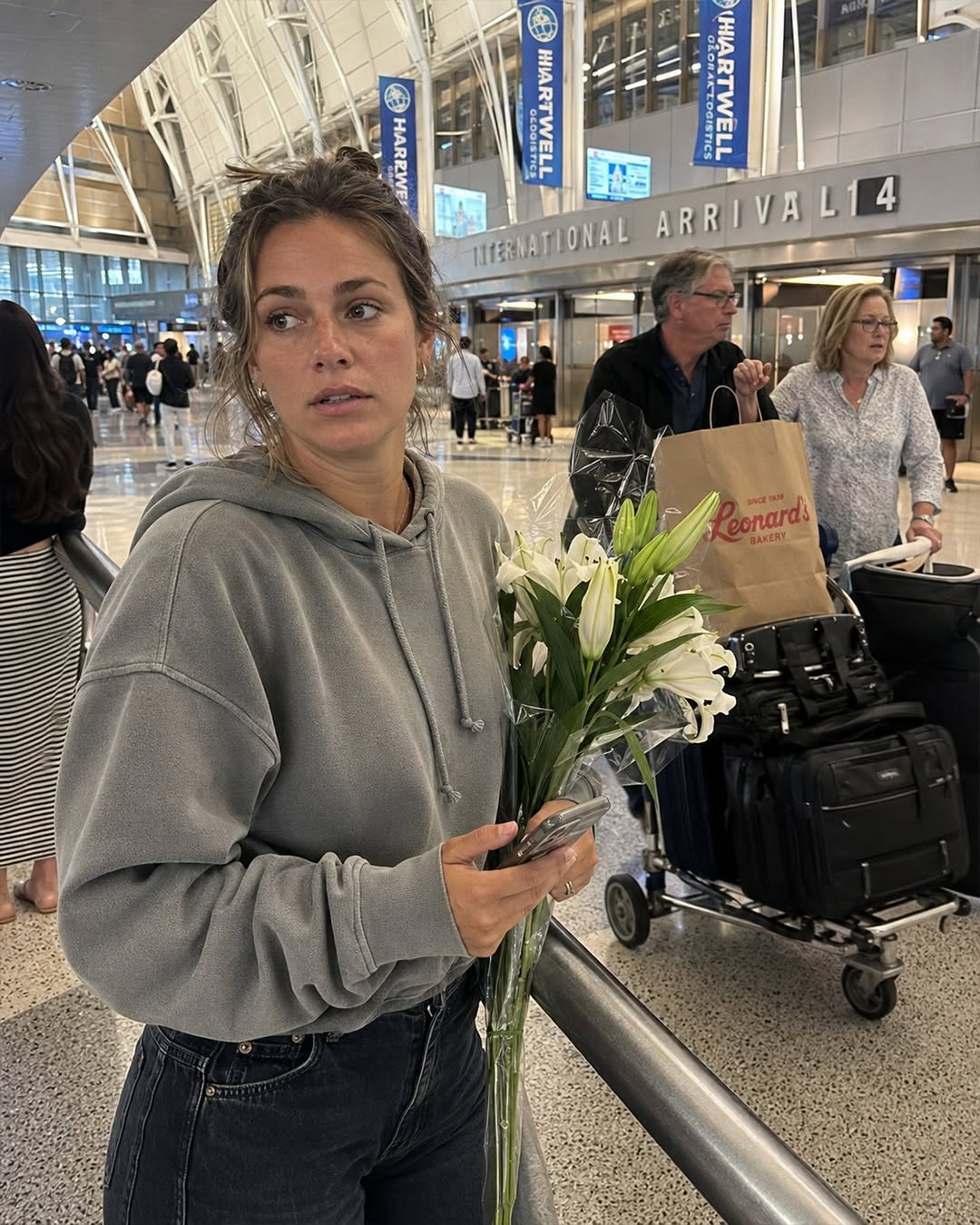
The arrivals hall was busy, bright, unchanged in the way public places remain unchanged even after rearranging a life. I stood near the barrier, not far from where I had once seen Nathan. The memory passed through my body, but it did not take the room with it.
That, I had learned, was healing.
Not forgetting.
Not pretending.
Simply being able to stand where you were hurt and notice other things too.
A child dropped a toy plane beside my shoe. I picked it up and handed it back. An older couple argued cheerfully about which carousel held their luggage. A young woman fixed her lipstick in the reflection of a dark window. The arrivals doors opened and closed, each time releasing another small wave of people into waiting arms.
My parents appeared near the back of a group from Madrid. My father pushed the cart as if luggage were a military campaign. My mother wore a red scarf and looked far too pleased with herself.
I lifted the coffee cups.
My mother’s face brightened.
My father pointed at the pastry bag before hugging me, which was exactly what I expected.
This time, when my mother asked where the car was parked, no lie stood behind the question. No husband was supposed to be overseas. No woman waited by a private corridor. No daughter had to swallow humiliation to protect her parents from a scene.
We walked together toward the parking level. My father complained about the flight. My mother corrected his exaggerations. I laughed and took one suitcase from the cart.
The ordinary rhythm of it felt luxurious.
As we passed the private corridor, I glanced at the new policy plaque mounted beside the access doors.
Direct authorization required. Guest identity verified. Staff may refuse access without penalty.
The language was plain. Almost boring.
I loved it.
Boring rules are often the walls that keep other people’s arrogance from entering your life.
My mother noticed me looking.
“Does it still hurt?” she asked.
I considered the question honestly.
“A little,” I said.
She nodded.
“But it does not own the airport,” I added.
My father, who had been pretending not to listen, cleared his throat.
“Good,” he said, “because I need a pastry before I forgive this terminal for the baggage delay.”
I laughed again.
On the drive home, the city rolled past in bright afternoon light. My parents told stories from Madrid. My father had bought another questionable ceramic object. My mother had made a friend in a museum café. I listened with the peaceful attention of someone no longer waiting for a hidden message to ruin the day.
That evening, we ate dinner at the kitchen island. The townhouse felt full again, not because Nathan had returned, but because people who loved me were inside it without making me smaller.
Later, after my parents went upstairs, I stood alone in the hall. The console table held fresh white flowers, a bowl for keys, and the framed photo from the airport opening.
The house had not erased Nathan by becoming empty.
It had replaced him with proof of life.
I thought of the woman I had been a year earlier, standing at arrivals with crushed lilies and a phone full of lies. She had wanted to break, but she did not have the privacy. She had wanted to cry, but she chose to see clearly first.
I felt tenderness toward her now.
Not admiration exactly.
Tenderness.
Survival often looks graceful from the outside and brutal from within.
If I could speak to that woman, I would not tell her to be calm. Calm had already done enough work. I would tell her to trust what she saw. To let witnesses love her without taking over. To understand that a public betrayal does not make the betrayed person public property.
And I would tell her that losing a liar can feel like losing a life until the room clears and you realize how much of that life was made of waiting.
Before bed, I opened the window. Night air entered the hallway. Somewhere in the guest room, my father laughed at something my mother said. I leaned against the window frame and let the sound settle in my chest.
Nathan had once told me I made everything feel heavy.
He had been wrong.
I had only been carrying what he kept handing me.
Now my hands were free.
Months later, I took my first solo flight after the divorce became final. Not for work. Not for family. For myself. A small trip to the coast, with one suitcase light enough to lift without help and a window seat booked in my own name.
At Terminal 4, I stood in the regular security line. No private lounge. No hidden corridor. No staff lowering their voices. Shoes in the tray, laptop out, boarding pass in hand. A family ahead of me had too many sunscreen bottles. A man behind me sighed at his watch. Ordinary travel surrounded me, and I felt richer than any private door had ever made me feel.
Dignity, I realized, does not require skipping every line.
Sometimes dignity is standing exactly where you choose without borrowing importance from a hidden door.
After security, I bought coffee and sat near the window at my gate. Below, the arrivals hall was barely visible, reduced by distance to a strip of light and movement. That felt right. Pain does not always vanish. Sometimes it becomes smaller because life grows larger around it.
My mother texted: Send a photo when you land. Your father says do not buy ceramic animals without supervision.
I smiled and replied: No promises.
When boarding began, I joined the line. No one announced my name. No one carried my bag. No one opened a secret door.
I walked down the jet bridge with sunlight at my back.
At the plane door, I paused for one heartbeat. The last time I had stood in that airport with my life changing around me, someone else had tried to turn my trust into a private joke. Today, I was leaving by choice, under my own name, toward a place no one had chosen for me.
That was not revenge.
It was better.
It was return.
The plane rolled toward the runway. Through the window, Terminal 4 slid past in bright flashes of glass and steel. Somewhere inside, people were arriving, waiting, lying, telling the truth, holding flowers, letting go, coming home.
The aircraft lifted.
I watched the airport grow smaller beneath the clouds until it was only a bright shape on the ground.
Then I turned toward the open sky.
Disclaimer: This story is a work of fiction created for entertainment purposes. Any resemblance to real persons, events, or places is coincidental.
To see the full cooking instructions, go to the next page or click the Open button (>) and don't forget to SHARE it with your friends on Facebook.