

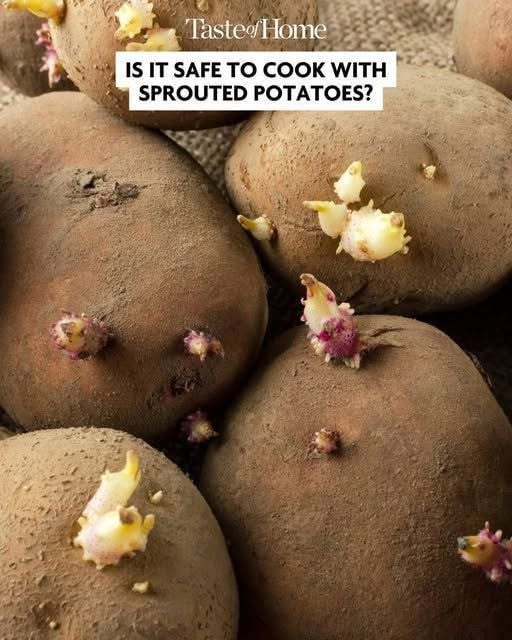
You reach into the pantry, grab a potato for dinner, and notice several little sprouts growing from its surface.
Suddenly, an important question comes to mind:
Are sprouted potatoes still safe to eat?
The answer depends on the condition of the potato.
While potatoes can stay fresh for weeks when stored properly, they don’t last forever. Once sprouts begin to appear, it’s worth taking a closer look before adding them to your meal.
Here’s what causes potatoes to sprout, when they’re still safe to eat, and how to store them to keep them fresh longer.
Why Do Potatoes Sprout?
Potatoes are living plant structures. Given the right conditions, they’ll naturally begin growing new shoots.
Sprouting is more likely when potatoes are exposed to:
Light
Warm temperatures
Humidity
Ethylene gas from nearby produce, especially onions
If your potatoes are sitting near a sunny window, on a kitchen counter, or stored alongside onions, they’re more likely to develop sprouts.
Although refrigeration may seem like a solution, storing potatoes in the refrigerator is generally not recommended. Cold temperatures can convert some of the potato’s starch into sugar, which may alter its flavor and texture during cooking.
Are Sprouted Potatoes Safe to Eat?
The answer depends on how far the sprouting process has progressed.
If the Sprouts Are Small
A firm potato with only a few small sprouts can often still be used.
Before cooking:
Remove all sprouts
Cut out the eyes
Trim away any green areas
Peel the potato thoroughly
If the remaining potato is firm and healthy-looking, it’s usually safe to cook and eat.
If the Potato Is Wrinkled or Heavily Sprouted
It’s best to discard a potato if it has:
Large or numerous sprouts
Wrinkled or shriveled skin
Soft or mushy spots
Significant greening
At this stage, the potato has begun to deteriorate and may contain higher levels of naturally occurring toxins.
When in doubt, throw it out.
The Hidden Toxins in Sprouted Potatoes
Potatoes naturally contain compounds called:
Solanine
Chaconine
These substances act as the plant’s natural defense system against insects and disease.
Fresh potatoes contain only small amounts of these compounds. However, as potatoes age, sprout, or are exposed to light, toxin levels can increase.
The highest concentrations are usually found in:
Sprouts
Eyes
Green portions of the skin
The inner flesh generally contains much lower levels.
Consuming large amounts of these toxins may cause symptoms such as:
Nausea
Vomiting
Diarrhea
Stomach pain
Headache
Fever
Most cases are mild, but higher exposures can lead to more serious symptoms.
Does Cooking Remove the Toxins?
Unfortunately, no.
Boiling, baking, frying, or roasting may reduce some toxin levels, but cooking does not completely eliminate solanine and chaconine.
That’s why it’s important to remove sprouts, eyes, and green areas before cooking a lightly sprouted potato.
Raw sprouted potatoes should never be eaten.
What About Green Potatoes?
A green potato isn’t necessarily toxic because of its color.
The green pigment comes from chlorophyll, which is harmless. However, chlorophyll often develops under the same conditions that increase solanine and chaconine levels—primarily exposure to light.
If only a small area is green, you can cut it away.
If a large portion of the potato is green, it’s safest to discard it.
How to Prevent Potatoes From Sprouting
Proper storage can significantly extend the life of your potatoes.
Store Them in a Cool, Dark Place
Ideal storage locations include:
A pantry
A cupboard
A basement storage area
Avoid direct sunlight and excessive heat.
Keep Potatoes Away From Onions
Onions release gases that can accelerate sprouting. Store them separately whenever possible.
Use Breathable Containers
Potatoes need airflow to stay fresh.
Good storage options include:
Mesh bags
Cotton bags
Wire baskets
Avoid sealed plastic bags, which can trap moisture and encourage spoilage.
Buy Only What You’ll Use
Buying in bulk may seem economical, but purchasing more potatoes than you can reasonably use often leads to waste.
Other Signs a Potato Has Gone Bad
Sprouting isn’t the only indication that a potato should be discarded.
Throw away potatoes that are:
Soft or Mushy
Fresh potatoes should feel firm and solid.
Deeply Wrinkled
Significant shriveling is a sign of age and moisture loss.
Moldy or Covered in Dark Spots
Mold growth, extensive bruising, or dark discoloration indicates spoilage.
Bad-Smelling
Fresh potatoes have a mild, earthy scent.
If a potato smells musty, moldy, or unpleasant, discard it immediately.
Final Thoughts
A few tiny sprouts don’t automatically mean a potato belongs in the trash.
If the potato is still firm and only lightly sprouted, removing the sprouts, eyes, and any green areas may make it safe to use.
However, heavily sprouted, soft, wrinkled, or significantly green potatoes should be discarded to avoid potential exposure to harmful toxins.
When it comes to questionable potatoes, a simple rule applies:
If you’re unsure, it’s better to replace the potato than risk getting sick.
Quick Rule of Thumb
✅ Firm potato + small sprouts = Usually salvageable after trimming
❌ Large sprouts + wrinkles + soft spots + extensive greening = Throw it away
To see the full cooking instructions, go to the next page or click the Open button (>) and don't forget to SHARE it with your friends on Facebook.