
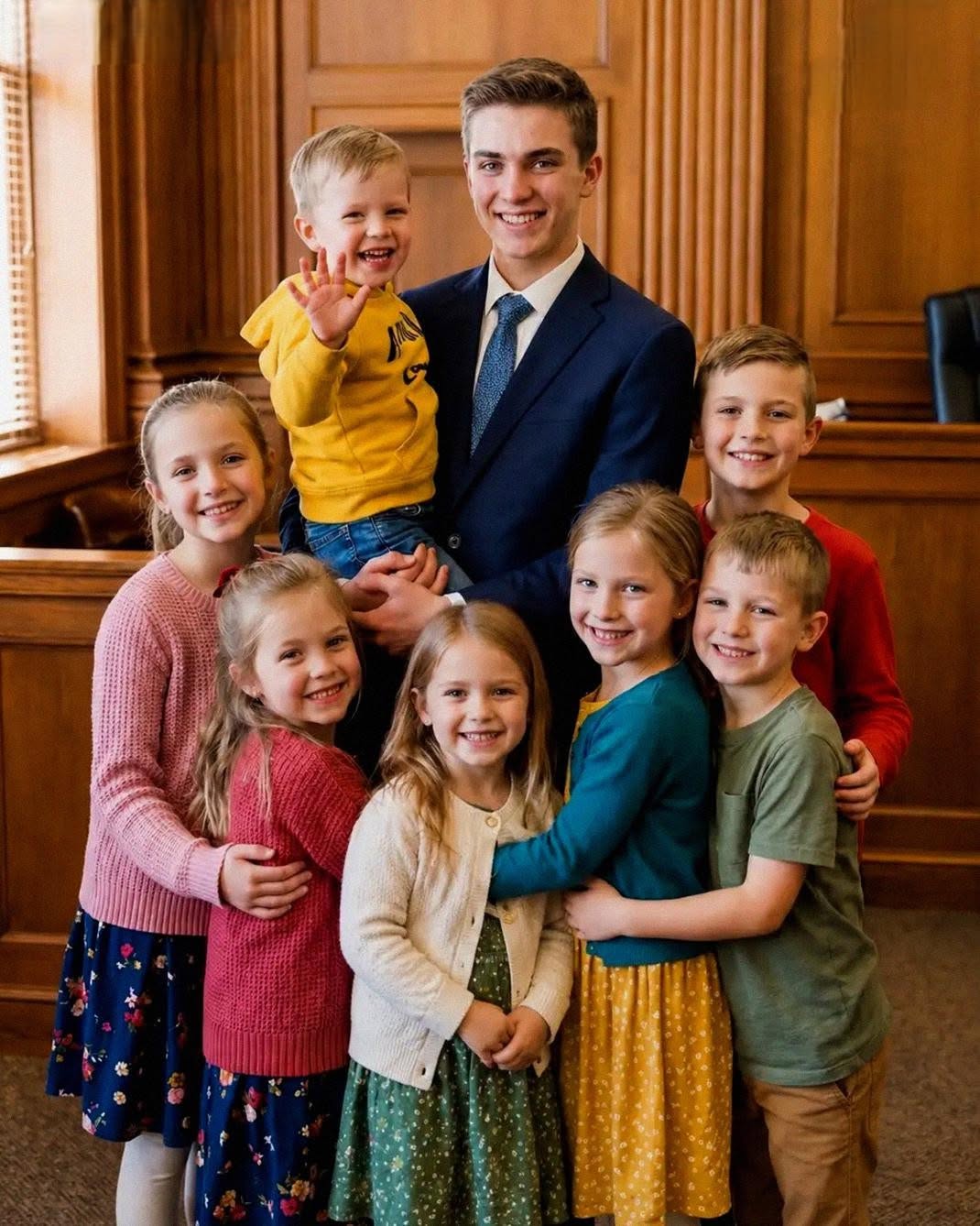
The profound silence following the harsh slamming of the car doors was the most deafening noise Rowan had ever endured. At just eighteen years old, his entire existence was defined by the chaotic, rhythmic symphony of a massive household of eight. It was a world filled with the morning clatter of cereal bowls, the endless, good-natured screeching of siblings arguing over misplaced hoodies, and the consistent, comforting thud of Benji dragging his favorite blanket across the hallway. But in a matter of ten seconds, when two stoic police officers stood on his porch with grim, rehearsed expressions, all that noise was violently stripped away. Rowan transitioned overnight from a carefree teenager anxious about upcoming community college finals into a desperate man holding the shattered fragments of a beloved family in his calloused hands.
His parents were gone, taken instantly in a devastating accident that left absolutely no room for tearful goodbyes. The sheer agony of the tragedy was compounded almost immediately by the cold, bureaucratic arrival of the state. Ms. Hart, a caseworker from child services, sat at their kitchen table, her eyes darting between Rowan’s youthful face and the thick manila folder that seemed to dictate their family doom. Her final verdict was delivered with clinical precision: the eight siblings would be separated and placed into different foster homes. The family house was significantly behind on its mortgage, Rowan had no steady income, and the logistical nightmare of keeping seven children under the roof of a teenager was deemed entirely impossible by the state.
Rowan looked across the table at Tommy, who was only six years old and still clutching their mother’s worn keychain, and felt a burning surge of protective fury. He refused to let his brothers and sisters become mismatched socks scattered throughout a broken foster system. He made a vow to work day and night, to learn whatever was necessary, and to fight for their unity. However, the legal system demands far more than just a big heart. It requires undeniable stability and financial security.
The threat to their family did not only come from the cold hand of the state; it also emerged from the shadows of their own family tree. Aunt Denise arrived at the very first court hearing draped in expensive pearls and smelling heavily of designer perfume. She presented herself to the court as the gracious savior the orphaned children desperately needed. Of course, she had no intention of taking all eight of them. She only wanted the youngest two, treating them like fashionable accessories she could easily curate to fit her lavish lifestyle, while ruthlessly abandoning the older siblings to fend for themselves in the world. In a quiet, bitter aside, she whispered to Rowan that he was being selfish and foolish, claiming that love alone could never pay the monthly bills.
Against monumental odds, the judge granted Rowan temporary guardianship. The decision was swayed by the boy’s intimate, day to day knowledge of his siblings’ lives. He knew exactly who needed an inhaler during the night, who hid food in their pockets when scared, and who absolutely required the hallway light to be left on to fall asleep. For the next three long years, Rowan endured a grueling life of brutal sacrifice. He dropped out of college and worked exhausting triple shifts across various warehouses and grocery stores. He taught himself how to sleep while standing up and how to navigate the endlessly complex bureaucracy of health insurance, school districts, and utility companies. His sole ally in this exhausting battle was Mrs. Dalrymple, their elderly neighbor who constantly provided warm casseroles and free childcare, fiercely refusing every cent Rowan tried to offer in return.
CONTINUE READING...>>
To see the full cooking instructions, go to the next page or click the Open button (>) and don't forget to SHARE it with your friends on Facebook.